
Lewiston Past-Resident Sources by Era
No single Lewiston index covers every address and every year. Past residents surface through a chain of sources that overlap in time. Each era leaves its own paper trail. Pick the source closest to the period you are studying first. Then carry its parcel number, legal description, name spelling, or street form straight into the next source down the line.
| Source | Years It Covers | Where Held | What It Shows |
|---|---|---|---|
| Sanborn maps | 1888-1918 Lewiston sets | University of Idaho digital collections | Building footprint, use, and block context |
| Business directories | 1905-1982, selected years | UI and Idaho State Archives | Names, firms, addresses, and regional labels |
| Telephone directories | 1920-2004, with gaps | University of Idaho | Subscribers, address, telephone, and spouse clues |
| Lewiston Tribune microfilm | 1908 onward | Lewiston Library | Obituaries, legal notices, business and social items |
| Recorded instruments | Coverage cutoff not published online | Nez Perce County Recorder | Transfers, liens, releases, and legal descriptions |
| LC State archives | 1893-present campus eras | Lewis-Clark State College | Yearbooks, catalogs, photos, and campus links |
Each era calls for a different entry point. For a recent chain, identify the parcel and request its latest recorded instrument. For a twentieth-century household, a city directory near the target year is the better start. An older building may not match today's street grid at all. A Sanborn sheet can show whether the modern structure or street form even existed then. The Recorder's public page offers no grantor/grantee web search and states no backward coverage date. So plan on a direct request.
Fix Lewiston Address Records First
A modern street number is only one key to the lock. The Nez Perce County Property Map can return a tax ID, situs address, mailing address, legal description, document reference, review year, photographs, and sketches. All of this comes after an address or map search. Situs means the physical spot where the property sits. A mailing address is where a tax notice goes. It may belong somewhere else entirely.
Copy the tax ID and full legal description before hunting past residents. For a platted parcel, save the subdivision, lot, and block. For land described through the Public Land Survey System, keep the township, range, and section. A deed may never repeat today's street number. The legal description still ties the same land together across transfers.
Record key. Write down the source date with every owner-card result because assessor names, mailing details, and review fields can change.
Trace Lewiston Resident Deeds Backward
The Nez Perce County Recorder holds deeds, grants, mortgages, releases, liens, probate-related instruments, and plats. Other recorded documents live there too. Counter and mail routes appear on its public page, but no open grantor/grantee index does. Ask for both the index entry and the record image. Say up front whether you need a plain or certified copy.
- Pull the current parcel card and copy its tax ID, names, legal description, and document reference.
- Request the instrument tied to that reference, plus its index entry.
- Read the transfer date and legal description. Identify the seller, who is usually the grantor.
- Search that seller's earlier acquisition as a grantee, using book, page, instrument number, and land description.
- Repeat backward and ask which grantor/grantee, tract, direct/reverse, deed-book, or microfilm index survives for older years.
- Grantor and grantee
- The grantor transfers an interest; the grantee receives it. An older owner often changes roles across successive deeds.
- Chain of title
- The dated sequence of recorded transfers affecting the same land.
- Legal description
- The formal land identifier, such as lot and block or township, range, and section. It is more durable than a street label.
County copy fees currently run $1 per page. Certification adds $1. Confirm costs before ordering, and include a self-addressed envelope plus expected payment with any mail request. A property card is only a lead, never a substitute for the recorded chain.
Map Lewiston Previous Residents by Year
The University of Idaho holds Lewiston Sanborn fire-insurance sets. The years covered are 1888, 1891, 1896, 1900, 1904, 1909, and 1918. The maps show building footprints and uses: dwellings, schools, parks, warehouses, and shops. They can reveal whether a structure stood near the date of a directory entry. They also show how a block once worked as a place. They cannot establish title or occupancy. So treat them as context. View the source images through the Lewiston 1900 Sanborn collection.
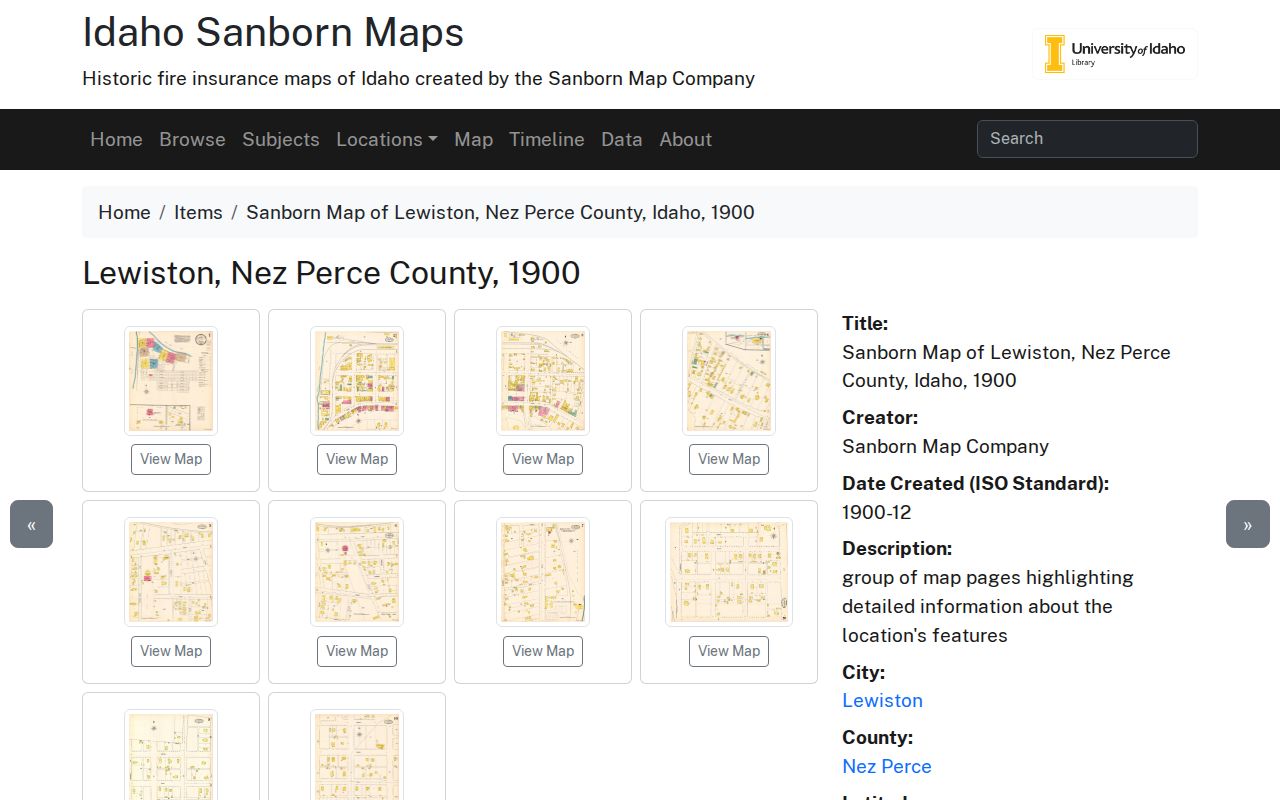
The sheet-level view earns its keep early. It places a historic address on its former block. The name then goes to directories or deeds. Compare street intersections, block numbers, and mapped uses. Do not force a modern parcel outline onto the old sheet. Downtown's historic core, Normal Hill, and the higher Orchards area each grew on a different timeline. The same year can mean very different neighborhoods.
Lewiston Address Records Change
Lewiston was not platted until 1874. Early records may lean on territorial, township, river-landing, or community terms instead of street numbers. The late-1969 Orchards annexation and the January 1970 charter change created another practical break. A pre-annexation directory may say Orchards or rural Lewiston. A later city file uses an incorporated address for the same land.
City Public Works controls new and current city addresses. Number changes can happen through administrative review. Street-name changes require City Council action under LCC §31-85. Preserve the former number, street spelling, change date, tax ID, and current standardized form. USPS formatting confirms delivery, not the legal identity of a parcel.
Note: A source labeled Lewiston/Clarkston and vicinity may include Clarkston, Asotin County, Orchards, and rural residents outside Lewiston city limits.
Lewiston Resident Archives Fill Gaps
The Nez Perce County Historical Society research service will search photographs, maps, books, and topic files for you by appointment. The library's local-history room adds another layer. Its holdings include city directories and newspaper microfilm. Lewiston publishes no house-history guide and no reverse-title index. A focused request works best: list the address variants, the parcel description, the people involved, and the date span you care about. The Society's access page explains the route: review the archival research route.
The appointment-based route reaches material no public address field exposes. That is its whole value. The 199-leaf WPA inventory of Nez Perce County archives offers another map. It points to past record series. It identifies historical custody rather than individual past residents. Use it to ask which office or book might bridge an online dead end.
Lewiston Past Households Beyond Owners
A deed names only the parties to a transfer. The people who actually lived at the address can stay invisible in it. The Lewiston city directory collections add listed householders, spouse names, phones, occupations, businesses, and regional marks. Where street pages exist, read them as address clues rather than proof of title or a complete household. Pairing years creates a cleaner trail.
- Choose a directory just before or after the target census year and save the exact entry.
- Search surname, spouse, initials, business, and the old street form in the census or library databases.
- Compare household names and ages without forcing a same-name match.
- Check the next directory to see whether the address or regional label changed.
When a past resident of Lewiston died, the trail often shifts from directories to death records. Normal Hill Cemetery burial records give a firm date and place. An obituary adds family names, though relationships it reports still need confirming against other sources.
Lawful use. Research Lewiston previous residents for family history, estate work, or property curiosity. Never use an address trail to track, harass, or harm a living person.
Lewiston Vital and Probate Endpoints
Nez Perce County keeps local birth and death records from 1907 through 1911. Those sit at the Recorder's office. Records for other years sit with the Idaho Bureau of Vital Records. Access rules depend on age. Idaho births become public after 100 years. Death, stillbirth, marriage, and divorce records open after 50 years. Newer certificates require qualifying proof from Idaho Health and Welfare. Check the official Idaho birth-certificate access route before requesting a restricted record.
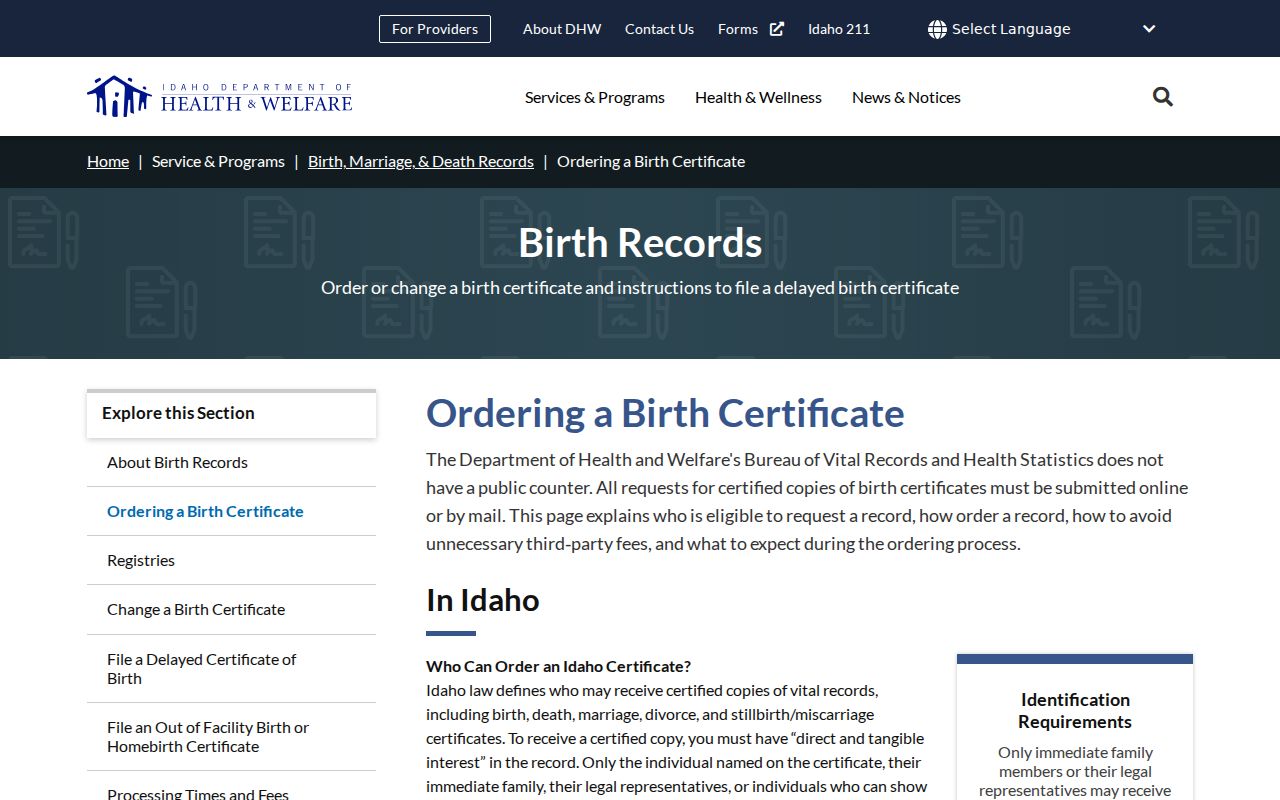
The state page separates public-age records from requests needing identity and relationship proof. Estate transfers call for two documents. Pair the recorded instrument with the Nez Perce District Court probate file. A will, personal representative, or court order can explain a transfer. A residents directory alone never shows that detail. Request the case and the deed separately, since the county offers no unified probate-and-title portal.